Website redesign
Clarifies the offer, proof, page flow, mobile experience, forms, and handoff path around what real visitors need to know.

(Small Business Website Redesign)
For business owners whose site exists, but visitors still do not understand the offer, trust the business, or know what to do next.
(When a redesign fits)
Clarifies the offer, proof, page flow, mobile experience, forms, and handoff path around what real visitors need to know.
A refresh may fix copy and structure. A rebuild may be better when the current stack, page flow, or content model is blocking the work.
Goals, current site link, service details, photos or proof, common buyer questions, and access to any existing analytics or forms.
(Boundaries)
(Proof)
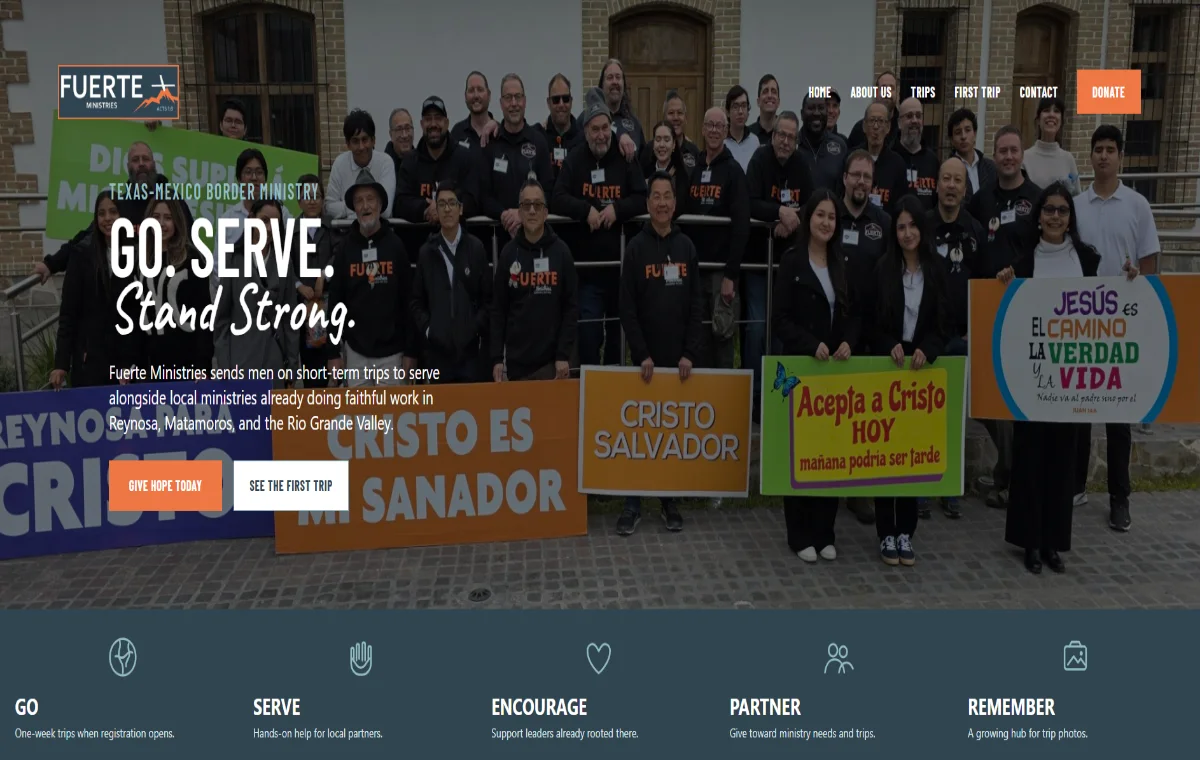
A ministry website proof point that should only be used with owner-approved language and no fabricated metrics.
View buildIf the redesign scope is uncertain, start with an audit and use the written clarity plan to decide whether to refresh or rebuild.
Request a Website Clarity Audit(Next step)
Best fit: an existing small business site with confusing offer language, weak proof placement, mobile friction, or a contact path that makes visitors work too hard.